


Guide
How to measure your dog.
Six measurements, taken standing. Get these right and almost every sizing problem disappears before it starts.
Before you start
You need a soft tape measure, a flat floor with some grip, and ideally a second pair of hands. A rigid ruler will not follow the body, and a slippery floor changes how your dog stands, which changes every number you are about to take.
Write the numbers down as you go. Do not try to hold six figures in your head and then type them into a size chart twenty minutes later.
The one rule that matters. Measure standing, with weight through all four legs. A sitting dog, a lying dog, or a dog held up under the belly will give you a short measurement every time.
The six measurements
Stand your dog up
Every measurement below is taken standing and bearing weight, on a flat non slip floor. A dog measured sitting, lying, or held up under the belly will measure short, and that single error causes more exchanges than anything else we see. If your dog cannot stand unaided, have a second person support them under the chest so the legs are still loaded.
Rear leg height
Floor to the top of the rear leg, where the leg meets the body. This is the number that decides wheelchair frame height, and it is the one people most often guess. Measure both sides if your dog stands unevenly and use the taller figure.
Back length
From the base of the neck, where the collar sits, to the base of the tail. Follow the line of the spine rather than the curve of the coat. This sets frame length on a cart and the body length on a full support harness.
Chest girth
Around the widest part of the ribcage, just behind the front legs. Snug against the body, not tight, and with the tape sitting flat. This is the primary measurement for harnesses and for the chest plate on a front support cart.
Weight
Weigh your dog now rather than using the number from their last vet visit. Dogs with mobility problems often lose muscle mass in the hind end, and a weight that is six months old can put you a full size out.
Limb measurements, for braces only
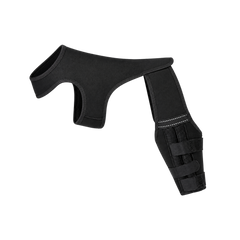
For a knee brace, measure the circumference of the thigh at its widest point, and the length from the knee joint to the hock. For a carpal brace, measure the circumference of the leg just above the wrist. Braces are the least forgiving product we sell on sizing.
Which measurement matters
Different products are sized off different numbers. Take all six anyway, because the cross check is what catches a mistake, but this is what each product is actually sized from.
| Product | Primary measurement | Cross check | Also useful |
|---|---|---|---|
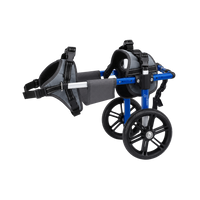
| Rear support wheelchair | Rear leg height | Weight | Back length |
| Front support wheelchair | Front leg height | Chest girth | Weight |
| Full support wheelchair | Rear leg height | Back length | Weight |
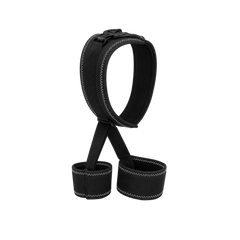
| Lift harness or sling | Chest girth | Weight | Back length |
| Knee or stifle brace | Thigh circumference | Knee to hock length | Weight |
| Carpal or wrist brace | Leg circumference above the wrist | Weight | Paw width |
| Boots | Paw width under load | Paw length | Nail length |
Where the primary measurement and the cross check disagree, that is a signal rather than a nuisance. It usually means the dog has lost condition in one area, and it is worth a conversation before you order.
Getting it checked
Send us the six numbers, your dog's current weight, and a photo taken from the side while they are standing. We will tell you which size we would order and why. It costs nothing, it takes us a few minutes, and it is the single most effective thing you can do to avoid a return.
We will also tell you when we think you should not buy the product at all yet. That happens more often than you might expect, and we would rather say it up front.
Questions
Two people and thirty seconds beats one person and ten minutes. One holds and reassures, the other measures. Take each measurement twice and use the larger number if they differ.
Either, as long as you tell us which. Most of our size charts are in inches. Mixing units halfway through is a surprisingly common cause of a wrong order.
Do not round on your own. Send us the numbers. Between sizes usually means a different model fits better rather than the next size up, and we can tell you which.
For a puppy or a progressive condition, an adjustable frame is usually the better answer than a size up. A cart that is too big is as unusable as one that is too small.
Yes, and it is free. Send the numbers, your dog's weight and a photo standing side on. We will tell you what we would order, including when the answer is that you do not need this product yet.
A reminder. This is a guide to measuring for equipment. It is not veterinary advice and it cannot tell you what is wrong with your dog. If your dog's movement has changed suddenly, or they are in pain, speak to your vet before you buy anything.
Not sure your numbers are right?
Send them over with a photo of your dog standing side on. We will confirm the size, or tell you honestly if we think you need something else.