


Guide
Common sizing mistakes.
Almost every exchange we process traces back to one of eight things. None of them are difficult to avoid once you know they exist.
Why this matters
Mobility equipment is not like clothing, where a size out is an inconvenience. A cart set at the wrong height changes how a dog carries themselves. A brace that is too loose does nothing, and one that is too tight rubs and gets abandoned in a drawer. A boot that comes off on the first walk is worse than no boot, because the paw was unprotected and you thought it was covered.
None of that is a reason to be nervous about ordering. It is a reason to spend five minutes with a tape measure, and to send us the numbers if anything looks borderline.
The eight mistakes
Measuring a sitting dog
By far the most common. A sitting dog's rear leg height is meaningless, and a lying dog's back length is short. Every measurement has to be taken standing with weight through the legs, even if that needs a second person to steady them.
Stand the dog, load the legs, then measure.
Using an old weight
Dogs with mobility problems lose muscle from the hind end, sometimes quickly. A weight taken at a vet visit six months ago can easily put you a full size out on a harness or a cart.
Weigh your dog this week, not last season.
Guessing between two sizes
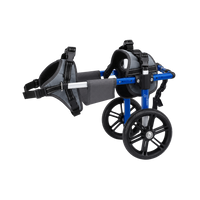
When the numbers land between sizes, the instinct is to round up so there is room to grow. On a wheelchair or a brace, too big is just as unusable as too small, and it usually rubs.
Send us the numbers instead of rounding.
Measuring the paw in the air
A lifted paw is narrower than the same paw bearing weight, because the pad spreads under load. Boots ordered from a lifted measurement come off on the first walk.
Measure the paw flat on the floor, weight through it.
Mixing inches and centimetres
Half the measurements in inches, half in centimetres, and a size chart in the other unit. It sounds obvious and it happens constantly, usually when two people take the measurements on different days.
Pick one unit and write it next to every number.
Measuring over a thick coat
On a double coated or long haired dog, the tape can sit half an inch off the body. That is enough to change a harness size and more than enough to change a brace.
Part the coat and take the tape to the body.
Sizing off the breed
Two dogs of the same breed and the same weight can need different frame heights. Breed averages are a starting point for a conversation, not a substitute for a tape measure.
Measure the dog in front of you.
Ordering a brace off weight alone
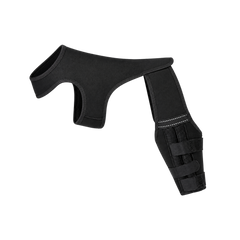
Braces are sized off limb circumference, not body weight. A heavy dog can have a slim thigh, and a compact dog can have a thick one. Weight on its own tells you very little here.
Measure the limb, then cross check with weight.
If you have already ordered
If something has arrived and it does not look right, stop before you use it. Take a photo of your dog wearing or standing in it, from the side, and send it to us with the size you ordered. Most of the time we can tell from the photo whether it is a fitting adjustment or a genuine size problem, and adjustment solves it more often than people expect.
If it is the wrong size, we will arrange an exchange. The conditions are set out in our returns policy, and the short version is that we would rather swap it than have it sit unused.
A reminder. This page is about equipment sizing. It is not veterinary advice. If your dog is in pain, or their movement has changed suddenly, speak to your vet first.
Borderline between two sizes?
That is exactly the moment to ask. Send the measurements and we will tell you which way to go, and why.