


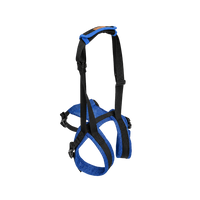
Guide
Brace, harness or wheelchair?
These three do genuinely different jobs, and the wrong one is an expensive mistake. Four questions, then a straight answer.
Question 1
Can your dog carry their own weight?
On the affected legs, at least some of the time, on a surface with grip.
Question 2
Is the problem in one joint or the whole back end?
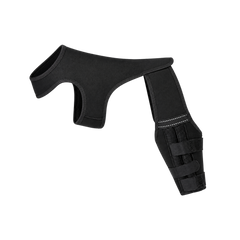
A single joint points at a brace. A general weakness points elsewhere.
Question 3
When do you find yourself helping?
Be honest about the pattern over a normal week rather than a bad day.
Question 4
Do they still want to go out?
This matters more than it sounds. Equipment helps a dog who wants to move.
Based on your answers
At a glance
Three products, three jobs.
| Brace | Harness | Wheelchair | |
|---|---|---|---|
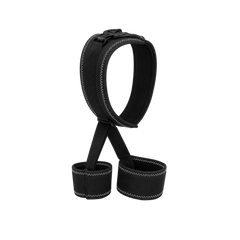
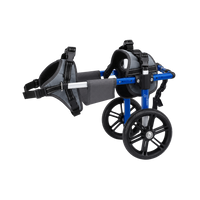
| What it does | Supports one joint | You share the load | Carries the weight |
| Your dog is | Walking, but sore | Walking, but unsteady | Unable to bear weight |
| Used | In sessions | At the hard moments | For walks and outings |
| Sized from | Limb circumference | Chest girth | Rear leg height |
| Typical cost | Lowest | Low | Highest |
| Fits in seconds | No | Yes | No |
| Useful later too | Sometimes | Almost always | Yes |
Most owners of dogs with progressive conditions end up with both a cart and a harness, and use them differently. The cart goes out for walks, the harness lives by the door for the car and the stairs.
Then buy the harness first. It is cheaper, more immediately useful, and it will still be useful later when you do need a cart. Nothing is wasted.
No. It supports the joint and can limit unwanted movement while your dog uses the leg. Whether surgery, conservative management or a brace is right is a decision for your vet.
Trust that instinct and tell us why. You know your dog and this is four questions. Send a short video and we will look properly.
Rather just ask someone?
Tell us how your dog moves and what has changed. We would rather talk you out of the wrong product than process a return.